
 EN
EN



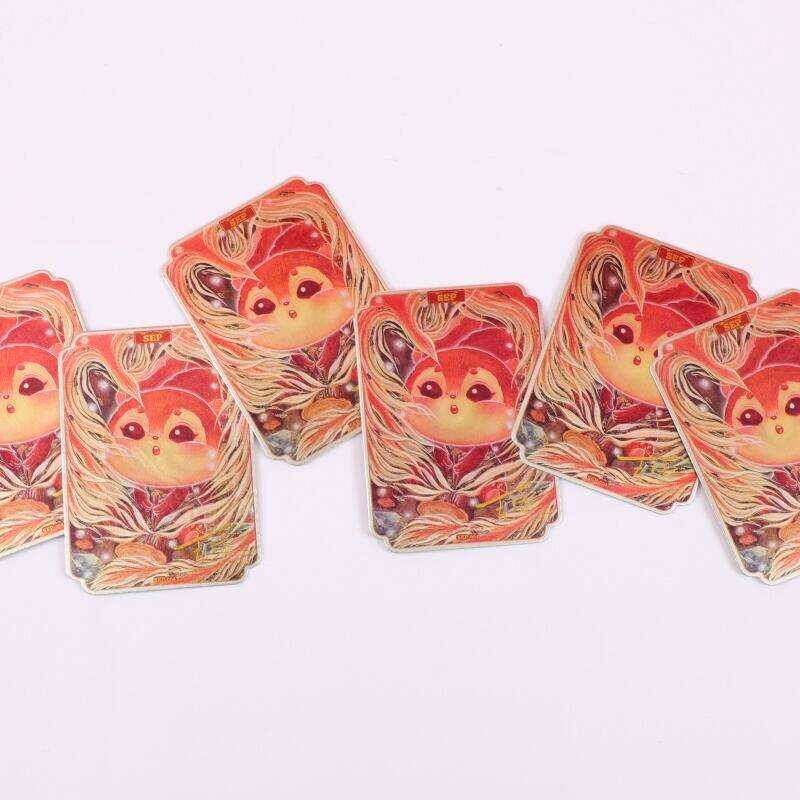
When buyers first encounter foil playing cards in a retail display or gift box, the immediate reaction is almost always the same: they look expensive, intentional, and premium. That reaction is not accidental. From a manufacturer's perspective, the application of gold and silver foil to foil playing cards is a deliberate craft decision that involves careful material selection, printing process coordination, and quality control at every stage. Understanding how this process actually works helps buyers, brand owners, and game designers make smarter decisions when specifying foil playing cards for their projects.
Foil playing cards are not simply printed cards with a shiny coating applied on top. The production of foil playing cards requires a dedicated sequence of steps that differ significantly from standard card printing. Gold foil and silver foil behave differently under heat and pressure, respond differently to card stock weight, and produce visually distinct results depending on the substrate and finish chosen. This article walks through the manufacturer's perspective on how foil playing cards are produced, what determines their quality, and how custom specifications translate into the finished product buyers receive.
The Foil Application Process for Playing Cards
Hot Stamping vs. Cold Foil Transfer
The two primary methods used to apply foil to foil playing cards are hot stamping and cold foil transfer. Hot stamping uses a metal die heated to a precise temperature, pressing metallic foil film onto the card surface under controlled pressure. This method is preferred for foil playing cards when fine detail, sharp edges, and deep metallic luster are required. Gold foil applied through hot stamping produces a rich, saturated tone that reflects light consistently across the card face or back design. Silver foil processed through hot stamping delivers a crisper, more mirror-like finish that highlights geometric and linear design elements particularly well.
Cold foil transfer, by contrast, applies an adhesive layer first and then laminates the foil film without heat. Cold foil is often used for foil playing cards that require broader coverage areas or inline integration with offset printing. While cold foil can achieve striking visual effects, it tends to produce a slightly softer metallic appearance compared to hot stamping. Manufacturers choose between these two methods based on the design artwork, the required production volume, and the target finish quality of the foil playing cards being produced.
Card Stock Selection and Foil Compatibility
Not every card stock works equally well with foil processes. For foil playing cards, the substrate must have sufficient surface smoothness to allow clean foil adhesion without lifting or patching. Manufacturers typically recommend coated card stock with a weight between 300gsm and 350gsm for foil playing cards intended for regular handling. Heavier stocks provide better dimensional stability during the heat and pressure of stamping, reducing the risk of warping or surface distortion. The coating type on the card also matters: gloss-coated surfaces accept foil more uniformly, while linen or matte-textured finishes require adjusted process parameters to achieve consistent foil playing cards results.
Gold Foil vs. Silver Foil: What Changes in Production
Optical Properties and Design Alignment
Gold foil and silver foil are not interchangeable options for foil playing cards. Each has distinct optical properties that interact differently with the surrounding print colors. Gold foil introduces a warm, saturated metallic tone that works harmoniously with deep reds, blacks, navy blues, and burgundy backgrounds. Silver foil provides a cooler, neutral metallic finish that complements grayscale designs, blues, purples, and minimalist palettes. When manufacturers review artwork for foil playing cards, they assess which foil type will enhance rather than compete with the surrounding ink colors. Choosing the wrong foil tone for the background palette is one of the most common specification errors seen in custom foil playing cards projects.

From a production standpoint, gold foil films require slightly higher stamping temperatures than silver foil films to achieve full metallic saturation. This means that manufacturers adjusting production runs between gold and silver foil playing cards must recalibrate equipment settings to maintain consistent output quality. Small temperature deviations during foil stamping can cause incomplete transfer, resulting in foil playing cards with patchy or dull metallic areas that fail quality inspection.
Foil Coverage Area and Production Efficiency
The coverage area of the foil design directly affects both material cost and production speed for foil playing cards. Fine-line foil patterns, border accents, and logo stamps are efficient to produce and allow for high-volume output with minimal foil film waste. Large solid-fill foil areas on foil playing cards consume significantly more foil film per sheet and increase the risk of uneven adhesion across wide surfaces. Manufacturers generally advise clients to balance visual impact with practical coverage ratios when designing foil playing cards, especially for high-volume production runs where material efficiency has a direct cost impact.
Quality Control Standards for Foil Playing Cards
Inspection Criteria at the Manufacturing Stage
Quality control for foil playing cards involves multiple inspection stages that go beyond standard print quality checks. Each batch of foil playing cards is evaluated for foil adhesion integrity, meaning that the metallic layer must not peel, crack, or flake under normal flexing. The registration accuracy between the foil stamp and the underlying print design is also critical: misalignment of even half a millimeter becomes visually obvious on foil playing cards because the metallic element draws the eye directly. Manufacturers use magnified inspection tools and calibrated light sources to detect surface defects that might pass unnoticed under casual visual review.
Durability testing is another standard component of quality assurance for foil playing cards. Cards are subjected to repeated shuffle simulation, edge abrasion tests, and moisture exposure checks to confirm that the foil surface maintains integrity through realistic use conditions. Foil playing cards intended for gift packaging or collector display have lower durability requirements than foil playing cards designed for active game play, and manufacturers adjust their process specifications accordingly to deliver the right balance of aesthetics and performance.
Packaging and Presentation of Foil Playing Cards
The final packaging of foil playing cards is treated as an extension of the product's premium positioning. Tuck boxes, rigid gift boxes, and magnetic closure cases are the most common formats used to present foil playing cards at retail or as corporate gifts. Manufacturers often coordinate the foil finish of the cards with matching foil elements on the packaging to create a cohesive unboxing experience. This alignment between foil playing cards and their packaging reinforces the perceived value of the product and strengthens brand impressions at the point of first contact.
FAQ
What is the minimum order quantity for custom foil playing cards?
Minimum order quantities for custom foil playing cards vary by manufacturer, but most facilities require at least 500 to 1,000 decks per order due to the setup costs associated with die fabrication and foil stamping calibration. Some manufacturers offer lower minimums for foil playing cards with simpler designs or shared die tooling arrangements.
Can foil playing cards be made waterproof?
Yes, foil playing cards can be produced with waterproof characteristics by combining the foil stamping process with a protective lamination layer. This laminate seals both the printed surface and the foil elements, making the foil playing cards resistant to moisture, spills, and surface abrasion without compromising the visual quality of the metallic finish.
How long does production take for foil playing cards?
Standard production timelines for foil playing cards range from 15 to 25 business days after artwork approval, depending on order volume and the complexity of the foil design. Rush production options may be available for foil playing cards with simpler specifications, but the foil stamping stage cannot be significantly compressed without risking quality inconsistencies in the finished cards.